
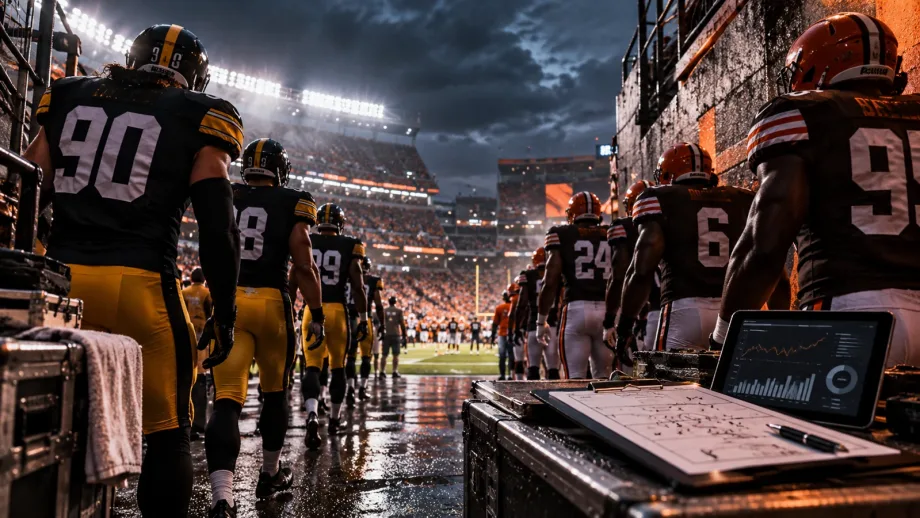
NFL → Pittsburgh Steelers → Cleveland Browns → 2026-10-01 → 8:15 PM ET
The short Thursday turnaround is the defining preparation variable. The useful betting questions center on protection communication, defensive-front rotation, late injury availability, field position and whether either offense can stay out of obvious passing downs.
This Week 4 preview is designed for the OddsBay NFL Intelligence hub. It deliberately does not invent a current spread, total, injury designation, opening line, Best Price, Steam Score or Line Archive observation. Those fields should be refreshed from verified sources close to publication. For readers building their process, the OddsBay sports betting guide explains the foundations behind price comparison and disciplined market reading.
What this game is asking bettors to solve
A useful NFL preview starts with the football problem, not with a desired wager. The side, total and moneyline are prices attached to a matchup; they are not the matchup itself. Start by identifying which units can dictate terms, where protection can break down, how each offense creates efficient early downs, and which defensive answers can force the opponent away from its preferred structure. Then compare that football view with verified market prices close to publication. This order matters because it prevents a bettor from seeing a number first and reverse-engineering reasons to support an opinion already formed.
The practical step is to connect this factor to one specific mechanism in this matchup and then ask whether the available price already reflects it. Avoid double-counting the same information. One offensive-line absence, for example, can influence pressure expectations, quarterback efficiency and the total, but it remains one underlying fact. Keeping those relationships visible makes the analysis more honest and makes the eventual postgame review more useful.
Quarterback play must be read through protection
Quarterbacks receive most of the attention, but their environment determines how much of the playbook is realistically available. Pressure changes timing, route depth, scramble decisions, checkdowns and turnover risk. The key is not simply sacks allowed or sacks produced. Look at whether pressure arrives quickly, whether an offense can identify and pass off rushers, whether the quarterback has answers against simulated pressure, and whether the defense can create disruption without sacrificing coverage numbers. Late offensive-line availability can materially change this analysis, so the final injury report belongs in the pre-kickoff update rather than being guessed days in advance.
The practical step is to connect this factor to one specific mechanism in this matchup and then ask whether the available price already reflects it. Avoid double-counting the same information. One offensive-line absence, for example, can influence pressure expectations, quarterback efficiency and the total, but it remains one underlying fact. Keeping those relationships visible makes the analysis more honest and makes the eventual postgame review more useful.
Early downs shape the entire betting script
First and second down performance often determines who controls personnel and tempo. An offense living in second-and-medium can run, use play action, attack multiple levels and keep the defense from teeing off. Third-and-long does the opposite. For totals, sustained drives can create scoring chances but can also reduce total possessions; repeated quick stops can suppress one offense while handing the opponent extra opportunities. The bettor should therefore connect efficiency to likely game script instead of treating a single average such as yards per play as a complete answer.
The practical step is to connect this factor to one specific mechanism in this matchup and then ask whether the available price already reflects it. Avoid double-counting the same information. One offensive-line absence, for example, can influence pressure expectations, quarterback efficiency and the total, but it remains one underlying fact. Keeping those relationships visible makes the analysis more honest and makes the eventual postgame review more useful.
Explosive plays versus repeatable offense
Chunk gains can decide an NFL game in seconds, yet explosive-play rates can swing dramatically in small samples. The better question is how those plays are created. Protection that allows deeper concepts, receivers who generate yards after catch, missed tackles, quarterback movement and busted coverage all have different levels of repeatability. On defense, leverage, tackling and the ability to pressure with four can reduce explosive opportunities. A preview should identify the mechanism and then ask whether the market already prices it, rather than assuming last week’s highlight will repeat.
The practical step is to connect this factor to one specific mechanism in this matchup and then ask whether the available price already reflects it. Avoid double-counting the same information. One offensive-line absence, for example, can influence pressure expectations, quarterback efficiency and the total, but it remains one underlying fact. Keeping those relationships visible makes the analysis more honest and makes the eventual postgame review more useful.
Red zone, fourth downs and hidden points
Yardage can mislead when one team repeatedly settles for field goals and another converts short fields into touchdowns. Red-zone spacing changes route concepts and running lanes, while fourth-down decisions can change both expected points and the number of possessions. Special teams and field position also create hidden value that does not show up cleanly in offensive box-score totals. The pregame handicap should distinguish between moving the ball and finishing drives, especially when evaluating a spread that may be decided by one possession.
The practical step is to connect this factor to one specific mechanism in this matchup and then ask whether the available price already reflects it. Avoid double-counting the same information. One offensive-line absence, for example, can influence pressure expectations, quarterback efficiency and the total, but it remains one underlying fact. Keeping those relationships visible makes the analysis more honest and makes the eventual postgame review more useful.
Injuries need role-based analysis
An injury designation is information, not a conclusion. The important questions are the player’s role, the replacement, the unit around him and the opponent’s ability to attack the change. A missing tackle can affect protection communication; a defensive back absence can alter coverage choices; a receiver limitation can change route distribution without removing the player from the lineup. Confirm status through reliable reporting, note the timestamp, and avoid turning uncertainty into false precision. If an important player remains questionable, the article should say exactly that.
The practical step is to connect this factor to one specific mechanism in this matchup and then ask whether the available price already reflects it. Avoid double-counting the same information. One offensive-line absence, for example, can influence pressure expectations, quarterback efficiency and the total, but it remains one underlying fact. Keeping those relationships visible makes the analysis more honest and makes the eventual postgame review more useful.
Weather and venue without clichés
Weather matters when it changes the mechanics of the game. Wind can affect deep passing and kicking more than ordinary rain. Field conditions can influence footing and pass rush. Temperature may matter less than popular narratives suggest. The correct process is to check a forecast close enough to kickoff to be useful, timestamp it, and describe the football mechanism that could be affected. A generic statement that bad weather automatically means an under is not analysis. Venue, crowd noise and travel can matter too, but they should be treated as context rather than automatic edges.
The practical step is to connect this factor to one specific mechanism in this matchup and then ask whether the available price already reflects it. Avoid double-counting the same information. One offensive-line absence, for example, can influence pressure expectations, quarterback efficiency and the total, but it remains one underlying fact. Keeping those relationships visible makes the analysis more honest and makes the eventual postgame review more useful.
How to read movement without inventing causation
A betting line can move because of new information, respected action, broad market adjustment, operator risk management, limits or simple price discovery. Unless evidence establishes the reason, do not claim that one headline caused the move. OddsBay Line Archive, Best Price and Steam Score can become valuable evidence when real observations exist. The article should record operator, market, price and timestamp, then describe what changed. Correlation is not causation, and a clean timeline is more useful than a confident story built without proof.
The practical step is to connect this factor to one specific mechanism in this matchup and then ask whether the available price already reflects it. Avoid double-counting the same information. One offensive-line absence, for example, can influence pressure expectations, quarterback efficiency and the total, but it remains one underlying fact. Keeping those relationships visible makes the analysis more honest and makes the eventual postgame review more useful.
Best Price is part of the handicap
Two bettors can make the same football prediction and have different long-term outcomes because they accepted different prices. Shopping the market is therefore not an optional final step. A half-point around an important spread number or a meaningful moneyline difference changes risk and reward. Use OddsBay comparison tools when current prices are available and verify that the displayed number is fresh. The question is not only which team has the stronger case; it is what price is being paid for that case.
The practical step is to connect this factor to one specific mechanism in this matchup and then ask whether the available price already reflects it. Avoid double-counting the same information. One offensive-line absence, for example, can influence pressure expectations, quarterback efficiency and the total, but it remains one underlying fact. Keeping those relationships visible makes the analysis more honest and makes the eventual postgame review more useful.
The final pre-kickoff checklist
Before betting, revisit every assumption. Confirm quarterback status and offensive-line availability. Check inactives. Update meaningful weather. Compare the current side, total and moneyline across available operators. Review whether the market has moved far enough to change the original value proposition. Finally, separate two statements that bettors often blend together: ‘I think this team is more likely to win’ and ‘this is a good bet at this price.’ They are not the same statement, and disciplined betting depends on knowing the difference.
The practical step is to connect this factor to one specific mechanism in this matchup and then ask whether the available price already reflects it. Avoid double-counting the same information. One offensive-line absence, for example, can influence pressure expectations, quarterback efficiency and the total, but it remains one underlying fact. Keeping those relationships visible makes the analysis more honest and makes the eventual postgame review more useful.
OddsBay current-market evidence slot
Before publication, this section should receive only verified, timestamped information: current side, total and moneyline where available; meaningful injury or availability updates; material weather; and any real OddsBay proprietary observations. If the evidence is unavailable, leave the claim out. Do not manufacture movement simply to make the article feel current.
Bottom line
The goal is to arrive at kickoff with a documented view of the matchup, the uncertainties and the price—not to predict every bounce. That makes the article useful before the game and auditable afterward. A strong wager requires both a football case and a price that justifies the risk. If the verified market moves beyond that threshold, passing is a valid conclusion.
Why this game belongs in OddsBay Intelligence
Pittsburgh Steelers at Cleveland Browns is not being surfaced merely because it is on the schedule. The short Thursday turnaround is the defining preparation variable. The useful betting questions center on protection communication, defensive-front rotation, late injury availability, field position and whether either offense can stay out of obvious passing downs. The homepage value comes from connecting the article to the canonical event, keeping the information current while the game is upcoming, and allowing the story to yield its priority once the event goes live. That lifecycle is a better fit for betting intelligence than leaving a generic preview pinned after its decision window has closed.