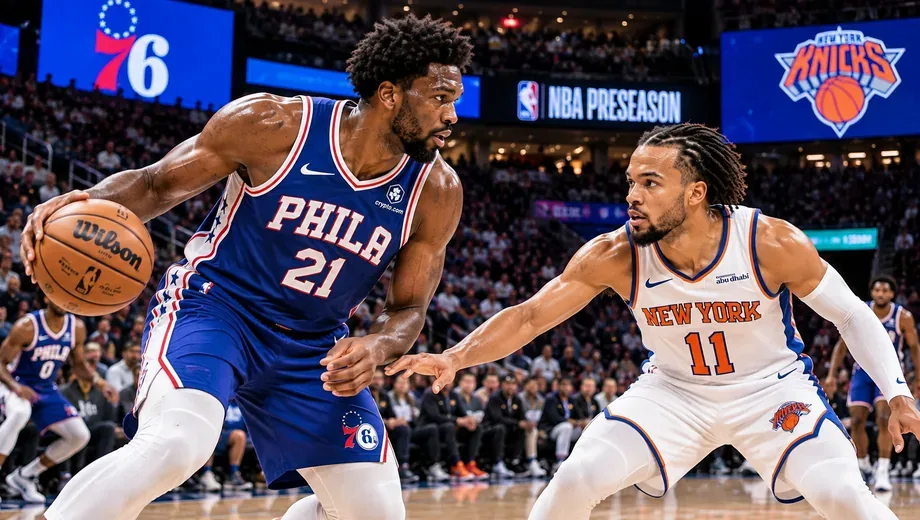
The Knicks arrive in Philadelphia as defending champions with unusual continuity; the 76ers arrive with the opposite problem, integrating LeBron James and Jaylen Brown into a core that already includes Joel Embiid, Tyrese Maxey and VJ Edgecombe. That makes availability and lineup construction the story before anyone looks at the score. Philadelphia has more elite creators than one possession can feature at once, while New York already knows how Jalen Brunson, OG Anunoby, Josh Hart, Mikal Bridges and Karl-Anthony Towns fit together. Preseason minutes can therefore expose very different questions on each side.
Philadelphia has a usage problem in the best sense
Embiid, Brown and Maxey all carried heavy offensive responsibility last season. NBA.com's preview notes that Embiid and Brown each posted 32.5% playoff usage rates, while Maxey ranked near the top of the league in time of possession. Adding James creates another elite decision-maker. The Sixers do not need all four to prove they can score; they need possessions that show how one star creates a better shot for another without everyone waiting for a turn.
LeBron can solve spacing without owning every possession
James' passing gives Philadelphia a way to connect high-usage scorers. A possession can begin with Maxey's speed, flow through James at the elbow and finish with Brown attacking a rotating defender or Embiid sealing inside. That sequence would be more informative than a series of isolations, because it demonstrates that the new talent can share one advantage rather than taking separate turns.
The Knicks offer a continuity benchmark
New York's championship core gives Philadelphia a difficult comparison. Brunson's group already understands its spacing, late-clock hierarchy and defensive communication. The Knicks added Andre Drummond, but the main structure remains intact. If Philadelphia's new groups look disjointed against that continuity, it does not make them a failure; it identifies exactly where timing still has to catch up with talent.
Availability changes every lineup conclusion
Preseason participation can be selective, especially for veterans and players managing workloads. A Philadelphia unit without Embiid asks different questions from one built around him; a Knicks group with several starters resting tells little about the regular-season matchup. Any lineup conclusion has to be tied to the players actually sharing the floor, not to the team name printed on the scoreboard.
New York's bench minutes are an actual competition
The Knicks have more uncertainty behind the established core. With starter workloads expected to be light, reserve and camp minutes can reveal who can defend within New York's scheme and keep the offense organized around Brunson's rest periods. The center depth is especially relevant after the roster changed behind Towns. Those minutes are useful because jobs and roles are genuinely being contested.
The most revealing Sixers possessions will be second actions
The first action can always put the ball in a star's hands. The harder question comes when New York takes it away. Does Brown become the second-side attacker? Does Maxey relocate for a return pass? Can Embiid screen and re-post without stopping the flow? Philadelphia's ceiling depends on making its surplus of creators additive rather than sequential.
The final score has almost no diagnostic value by itself
A Knicks reserve run against a Philadelphia camp unit can swing ten points without changing anything about the teams' regular-season outlook. Conversely, two clean possessions involving James, Embiid and Maxey may matter even if the shots miss. The useful record from this game is a lineup record: who played together, what responsibility each player held and whether those combinations produced coherent possessions on both ends.
Philadelphia’s absences can make the creation map unusually clear
Reports on game day indicated that Philadelphia would be without several major pieces, including LeBron James, Tyrese Maxey and Joel Embiid, with other players also managing camp issues. That removes the temptation to judge a star-heavy lineup that may not exist tonight and instead puts the burden on the available creators. Jaylen Brown’s possessions become especially informative: can he organize offense when the first option, or does Philadelphia use him primarily to finish advantages created by guards?
The answer matters beyond one exhibition. A team with James, Maxey and Embiid will inevitably stagger stars during the regular season. Preseason minutes without them can expose which reserve combinations are capable of surviving those staggered windows and which lineups require a primary organizer to function.
The Knicks’ shortened offseason changes what continuity should look like
New York’s championship run reduced the recovery window for a core that already carried heavy responsibility. Mike Brown therefore has reason to treat the opener as a controlled re-entry rather than a normal dress rehearsal. Brunson’s return from wrist surgery and the broader need to manage veteran workloads make minutes distribution part of the story.
Continuity should show up in recognition rather than volume. The Knicks do not need Brunson and Karl-Anthony Towns to play long enough to produce regular-season numbers. They need familiar actions to appear quickly: early screening angles, weak-side spacing, Hart’s connective passing and defensive communication that does not require repeated corrections. If those habits arrive within short stints, the limited minutes have still produced useful evidence.
Drummond changes the geometry behind Towns
Andre Drummond gives New York a veteran center option with a very different offensive profile from Towns. Towns stretches a defense and can create from the perimeter; Drummond’s value is concentrated around screening, rebounding and interior presence. The bench therefore cannot simply run the same spacing map with a different name at center.
That creates a practical preseason question: can New York’s reserve guards generate enough pull-up or downhill pressure to make Drummond’s screens dangerous without crowding the lane? If they can, his offensive rebounding becomes an added weapon. If they cannot, Philadelphia can sit deeper in the paint and turn the Knicks’ size into congestion.
Brown can be evaluated by the possessions he has to organize
Philadelphia’s new star wing does not need to prove he can score in October. More revealing are the possessions in which the first action stalls. Does Brown call for a screen and create a second advantage? Does he hit a cutter when help loads toward him? Can he keep the ball moving when New York switches a wing onto him and denies the preferred matchup?
Those questions become even more important if James and Maxey are unavailable, because Brown cannot hide inside a finished regular-season hierarchy. The game can provide a clean look at how much offensive organization Philadelphia can ask him to carry when the roster is incomplete.
Rebounding has to be separated from lineup size
New York can field substantial size, but a big lineup does not automatically rebound well if perimeter defenders lose contact or if the center is pulled away from the rim. Philadelphia can test that with drives and long rebounds even without Embiid. Conversely, the Sixers’ smaller or younger groups may have to gang rebound against Towns, Drummond and Hart.
The useful evidence is who owns the responsibility. If guards consistently crack back on bigs and wings finish possessions, the lineup has a collective solution. If the center is expected to erase every mistake, the structure becomes vulnerable whenever he contests away from the basket.
Bench combinations can matter more than the ceremonial starters
Because both teams have workload reasons to manage established players, the middle of the game may contain the most transferable information. New York’s younger guards and wings are competing for trust behind a championship core. Philadelphia’s available reserves are trying to define how they fit around an expensive, star-driven roster. Those minutes can reveal who can defend without fouling, who can initiate against pressure and who can keep spacing intact when the primary stars sit.
That is also where the final score becomes least informative. A reserve unit winning a fourth quarter against camp players does not settle the matchup. A reserve guard repeatedly getting the team into organized offense against NBA-level pressure, however, can earn a role that matters once the games count.
For broader context on evaluating NBA markets, see the OddsBay NBA Game Intelligence page and the sports betting guide.
Availability changes the question, but it does not erase the value of the game
A preseason opener with missing stars should not be treated as a preview of the teams at full strength. It can still reveal whether the supporting structure is credible. New York can show that championship habits survive shorter veteran stints and different center combinations. Philadelphia can show which available players are capable of creating, spacing and defending without leaning on Embiid, Maxey or James. Those answers will matter later when injuries, rest and staggered rotations inevitably produce incomplete lineups again.
Philadelphia can learn which skills travel across star combinations
The Sixers’ eventual rotation will contain far more star power than the opener is likely to show, but that makes complementary skills easier to isolate. A guard who can enter offense against pressure, a wing who can defend without help, or a big who can screen and rebound without demanding touches can fit beside several different stars. Those portable skills are especially valuable on a roster whose best players will not always share identical availability. Philadelphia should therefore care less about who temporarily becomes the leading scorer and more about which players make every surrounding lineup easier to organize.
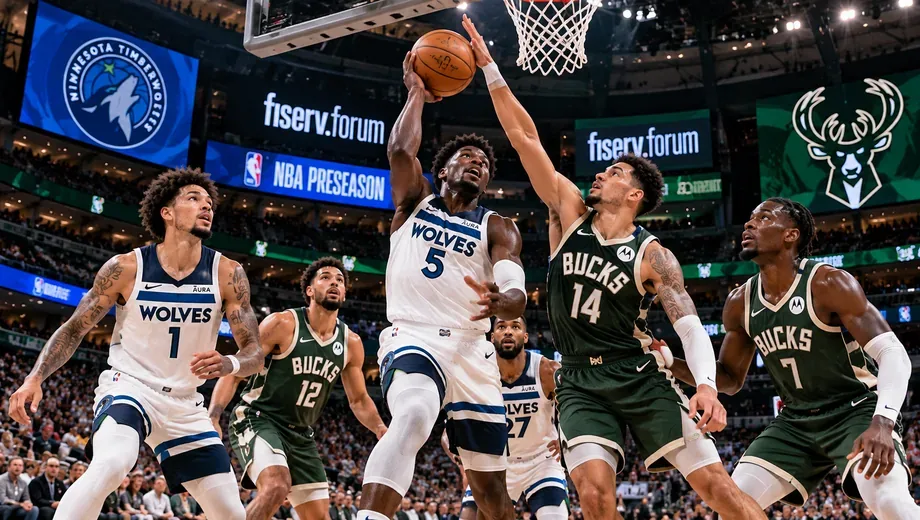 Minnesota Timberwolves at Milwaukee Bucks: What Size, Rebounding and Rotation Depth Can Reveal in Preseason
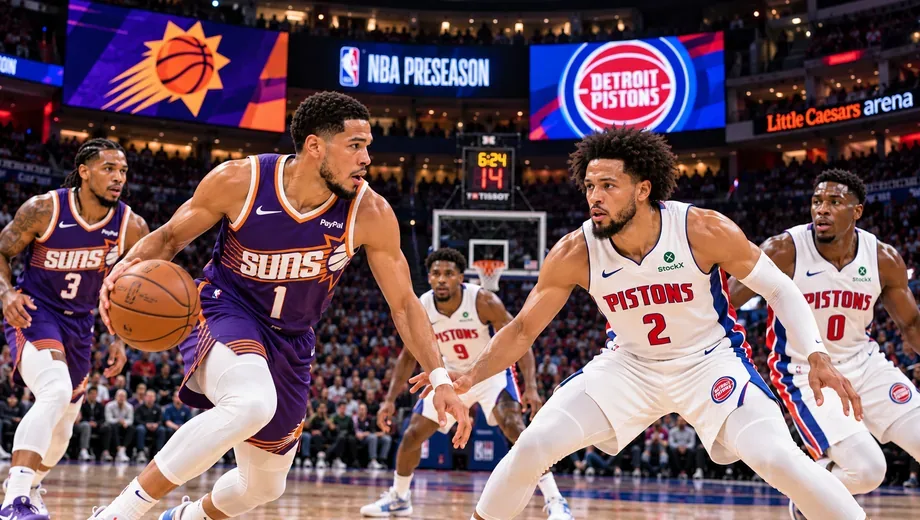 Phoenix Suns at Detroit Pistons: Reading New Roles Without Overreacting to One Preseason Night
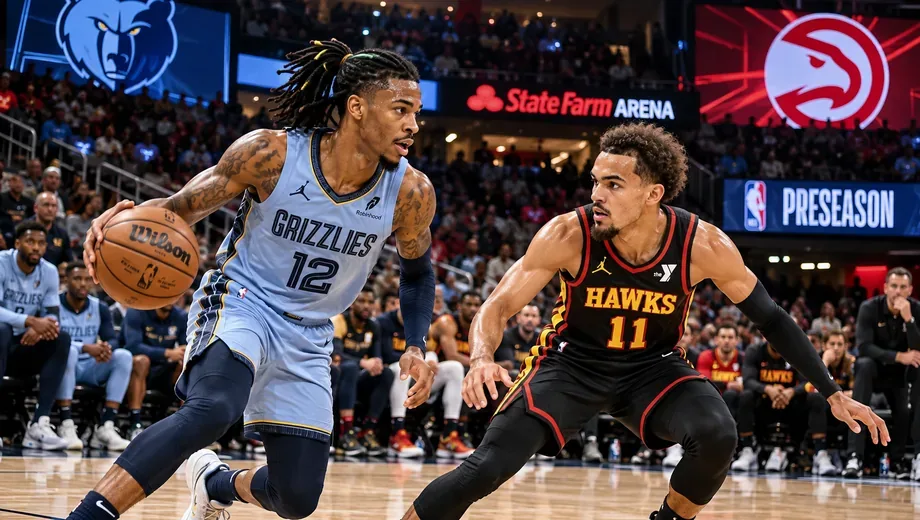 Memphis Grizzlies at Atlanta Hawks: What the First Preseason Rotations Can Actually Tell Us