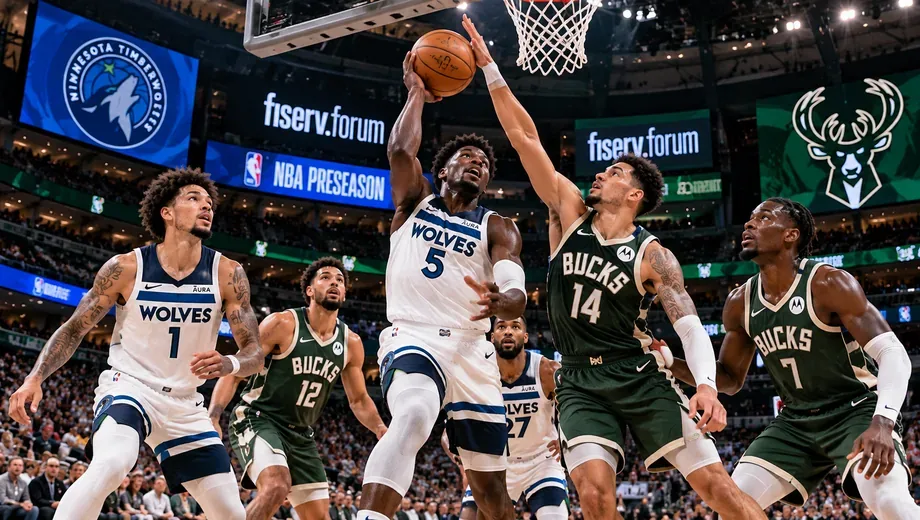
Minnesota at Milwaukee is a matchup between two teams that changed the meaning of their size. The Timberwolves traded for LaMelo Ball and added Jonathan Kuminga while keeping Anthony Edwards, Jaden McDaniels and Rudy Gobert. Milwaukee begins its first post-Giannis season with new coach Taylor Jenkins and a younger frontcourt led in part by Kel'el Ware, plus Tyler Herro, Jaime Jaquez Jr. and lottery picks Brayden Burries and Nate Ament. The question is not which team looks taller on a roster sheet. It is which combinations can control the paint and glass without surrendering spacing, mobility or creation.
Gobert still defines Minnesota's interior baseline
Gobert gives the Wolves an established rim protector and defensive rebounder, which lets perimeter defenders pressure the ball with a safety net behind them. The new issue is how Minnesota builds offense around that advantage. Ball's passing can reward Gobert's rim runs, while Edwards can attack the gaps created by early screens. If those actions keep the weak side occupied, Minnesota can play big without allowing Milwaukee to load the paint.
LaMelo changes the rebounding-to-offense connection
Ball can turn a defensive rebound or outlet into offense before the opposing frontcourt is organized. That matters against a Milwaukee team learning new defensive responsibilities. Minnesota does not need him to grab every rebound; it needs the first pass to find him early enough that Edwards and Kuminga can run lanes against a retreating defense. The speed of that conversion is part of the Wolves' new identity.
Ware gives Milwaukee a different kind of size
Ware arrives with real rebounding and shot-blocking production plus enough shooting touch to pull a defender away from the rim. NBA.com's Bucks preview notes that he averaged 9.0 rebounds, 1.1 blocks and 1.2 made threes in only 22 minutes last season. Against Gobert, that range matters. If Ware can occupy Gobert outside the paint, driving lanes for Herro and Jaquez become cleaner; if Gobert can stay near the rim, Milwaukee's spacing becomes easier to contain.
The offensive glass creates a transition tax
Sending extra bodies to the offensive boards can generate second chances, but it also leaves fewer defenders behind the ball. Minnesota's athletic wings can punish that gamble. Milwaukee therefore has to decide when Ware or another forward crashes and when the group prioritizes floor balance. The same calculation applies to the Wolves: a Gobert tip opportunity is valuable, but not if Herro receives the outlet against an empty backcourt.
Kuminga can determine whether Minnesota's bigger groups breathe
Kuminga gives Minnesota a powerful forward who can attack closeouts and defend across positions, but his fit depends on spacing. In units with Gobert, the other three players must keep enough shooting and handling on the floor to prevent congestion. If Kuminga can screen, cut and attack a rotating defender rather than standing beside another interior player, the Wolves can preserve size without making Edwards' driving lanes smaller.
Milwaukee's small-ball counter is about mobility
The Bucks do not have to match Minnesota inch for inch. Herro-led groups with mobile forwards can try to pull Gobert into repeated decisions and win with speed rather than mass. The cost is defensive rebounding. If Milwaukee goes smaller and cannot finish possessions, Minnesota can turn missed shots into extra possessions and force the Bucks to abandon the experiment.
| Lineup choice | Potential gain | Potential cost |
|---|---|---|
| Gobert with bigger forwards | Rim protection and rebounding | Less driving space if shooting is insufficient |
| Ware stretching the floor | Pulls the rim protector outward | Can weaken offensive rebounding position |
| Milwaukee small-ball | Mobility and perimeter creation | Defensive rebounding pressure |
Rebounding totals need lineup context
A team can win the overall rebound count because one reserve-heavy quarter was lopsided. The more useful split is which lineups secured the first miss when both teams had credible NBA size on the floor. Gobert against Ware, Kuminga at power forward, and Milwaukee's young wings helping from the perimeter each create different rebounding responsibilities. Those combinations are the unit of analysis, not the box-score total.
The matchup's best answer may be a trade-off
Neither team needs one perfect five-man solution in October. Minnesota may discover that its biggest lineup protects the rim but needs more shooting; Milwaukee may find that its most mobile unit scores cleanly but gives up the glass. Those trade-offs are useful because they tell the coaching staffs what must be paired together. Preseason can reveal the cost of a lineup before it reveals its final value.
Milwaukee’s post-Giannis frontcourt is a new problem, not a smaller version of the old one
Milwaukee begins a season without Giannis Antetokounmpo for the first time since 2012-13, and new coach Taylor Jenkins is not simply replacing one power forward. The trade brought Tyler Herro, Kel’el Ware and Jaime Jaquez Jr., while lottery picks Brayden Burries and Nate Ament add more young size. The Bucks therefore have to rebuild how paint pressure, rim protection and rebounding are distributed across five players.
Against Minnesota, that redistribution will be visible immediately. Ware can provide vertical size, but he cannot replicate Giannis’ grab-and-go transition force. Herro can create off the dribble, but he needs screeners and spacing to turn that creation into efficient team offense. Jaquez can absorb physical wing possessions, yet the group still has to decide who cleans the defensive glass when Ware contests.
Minnesota’s Ball-Edwards pairing can punish slow frontcourt decisions
LaMelo Ball and Anthony Edwards create a transition problem because either can advance the possession and the other can become an immediate scoring threat. Milwaukee’s bigs cannot assume the ball will be walked into a conventional half-court matchup. A slow retreat or a confused cross-match can give Edwards a runway before the defense identifies assignments.
The Wolves can also use Ball’s passing to make size more dynamic. Gobert’s rim run occupies the deepest defender, while Kuminga or McDaniels can fill lanes that force wings to choose between protecting the paint and staying attached outside. The possession becomes a test of Milwaukee’s communication as much as its foot speed.
Ware’s shooting threat can move Gobert without beating him one-on-one
The cleanest way to reduce Gobert’s rim influence is not necessarily to attack him repeatedly. It is to make his positioning expensive. If Ware is credible above the break or in pick-and-pop space, Gobert has to decide how far he can help toward Herro’s drive before surrendering a clean kick-out. Even a few successful possessions can force Minnesota to adjust the location of its low man.
That does not automatically make Milwaukee small or perimeter-oriented. Ware can still dive, seal and crash after stretching the floor. The value is in alternating those jobs so Gobert cannot camp in one solution. Minnesota’s counters—switching a forward onto Ware for a possession or pre-rotating from a different shooter—will show how comfortable the Wolves are changing coverages around their anchor.
Kuminga’s role connects Minnesota’s size to its mobility
Jonathan Kuminga gives the Wolves a forward who can defend up or down a position and turn a closeout into rim pressure. His fit becomes especially important in minutes with Gobert because Minnesota needs the other four spots to preserve movement. If Kuminga screens for Ball or Edwards and then attacks a rotating defender, his physicality complements Gobert instead of occupying the same space.
Defensively, Kuminga can let Minnesota avoid using Gobert on every large forward. That keeps the center nearer the rim and allows the Wolves to switch more selectively. The cost is on the glass: every switch that sends a wing onto a bigger Buck creates a rebounding matchup that must be solved when the shot goes up.
Herro’s pick-and-roll choices will define Milwaukee’s spacing
Herro enters a roster where his scoring gravity can become the first action rather than a secondary one. Against Minnesota, the important question is whether he can force two defenders to commit. If Gobert stays deep, Herro needs to make the pull-up or pocket-pass decision quickly. If Minnesota brings the big higher, Ware’s roll and the weak-side corner become available.
The Bucks should not need Herro to win every possession in isolation. A successful new offense would use his threat to create a chain: screen, two defenders react, short pass, second-side attack. That chain is more sustainable than asking him to replace Giannis’ pressure through shot volume alone.
The glass can expose which team paid too much for its preferred spacing
Both teams can create attractive offensive spacing by moving size away from the basket, but every such choice has a rebounding price. When Ware pops, Milwaukee loses a natural offensive rebounder unless a wing crashes. When Minnesota sends multiple players into transition, Gobert can be left fighting two bodies by himself. Those are not abstract trade-offs; they determine whether a good defensive possession actually ends.
Tracking who secures contested misses after specific lineup choices will therefore be more informative than the total rebound margin. A small Milwaukee unit that rebounds collectively may be viable. A large Minnesota unit that repeatedly gives up long rebounds may not be receiving the advantage its size appears to promise.
For broader context on evaluating NBA markets, see the OddsBay NBA Game Intelligence page and the sports betting guide.
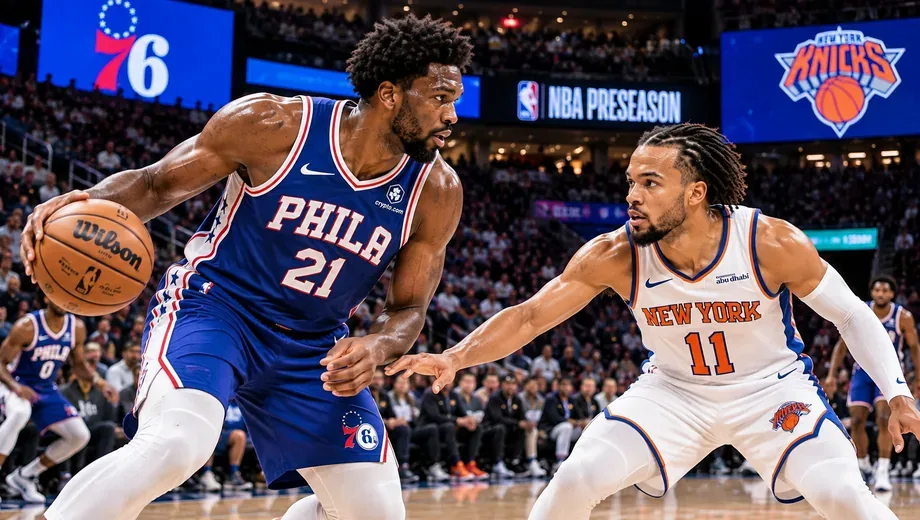 New York Knicks at Philadelphia 76ers: Availability, Lineup Construction and the Limits of a Preseason Score
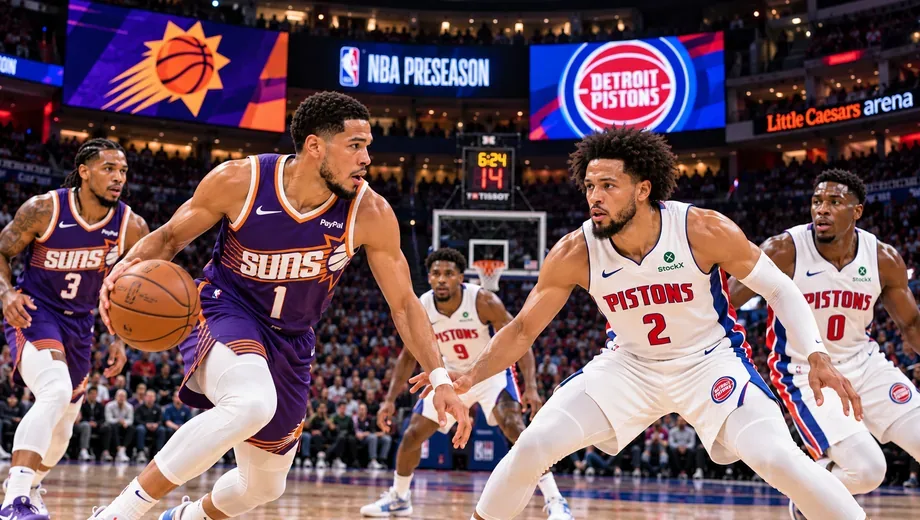 Phoenix Suns at Detroit Pistons: Reading New Roles Without Overreacting to One Preseason Night
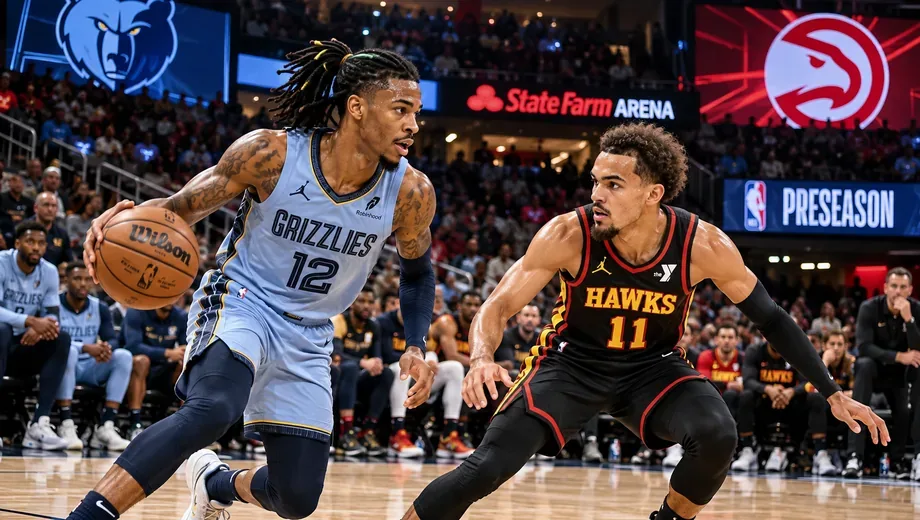 Memphis Grizzlies at Atlanta Hawks: What the First Preseason Rotations Can Actually Tell Us