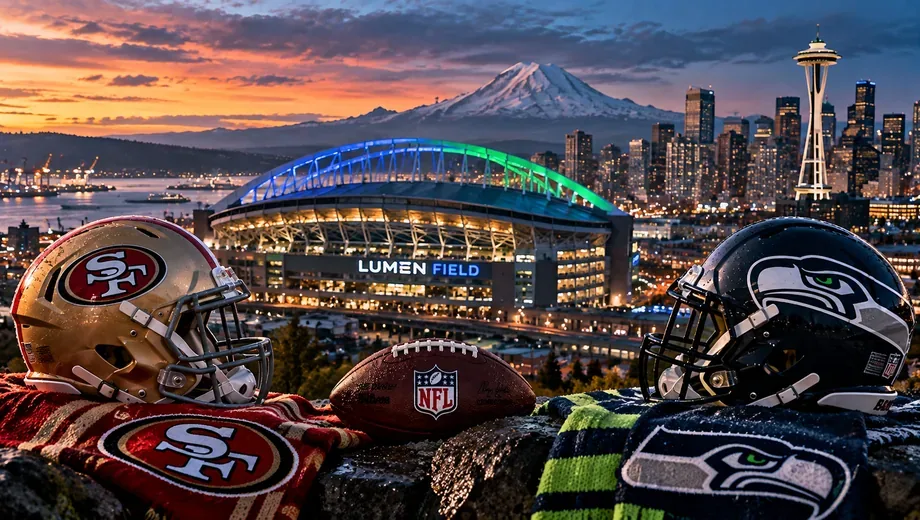
San Francisco 49ers visits the Seattle Seahawks on 2026-10-11 at Lumen Field. This OddsBay Week 5 analysis is built around divisional familiarity, crowd communication, space creation and pressure answers. The purpose is not to predict from reputation, nor to stretch a routine preview with generic betting language. It is to identify the football questions that can be checked, updated and connected to market information without inventing evidence.
Lumen attacks communication before Seattle attacks the ball
The home environment matters most before the snap. San Francisco has to communicate cadence, protection and motion through a stadium designed to be loud. Silent-count mechanics can reduce the problem, but every procedural mistake gives Seattle a down-and-distance advantage without requiring a defensive win after the snap.
Motion becomes expensive if the clock becomes the opponent
San Francisco uses movement to identify coverage rules and create leverage. In noise, the same movement can consume communication time and squeeze the play clock. The 49ers need to preserve the informational value of motion without allowing it to slow the operation.
Seattle’s coverage can force the 49ers to hold the ball
If Seattle disguises the picture well enough to delay the quarterback’s confirmation, the rush gets extra time even without an immediate win. That relationship is important: coverage and pressure are not separate stories. A half-second of hesitation can turn a stable pocket into a collapsing one.
Tackling determines whether San Francisco’s space becomes damage
The 49ers can create explosive results without throwing the ball deep if a receiver or back catches in space and defeats the first tackler. Seattle therefore needs leverage, pursuit and clean finishing. Allowing yards after catch would undermine otherwise successful coverage calls.
Rush-lane discipline matters when the play leaves structure
A defender can beat his blocker and still lose the snap if his angle creates an escape lane. Seattle needs to compress the pocket without opening easy exits. San Francisco can turn an overaggressive rush into an extended play, forcing the secondary to cover a second time.
Divisional familiarity makes counters more valuable
These teams know the broad families of concepts they are preparing to face. That makes small changes in formation, motion and pressure presentation more meaningful. A familiar concept shown from a different picture can create the hesitation needed to win a critical down.
Seattle’s offense has to prevent the crowd from being wasted
The home defense can generate energy and field position, but Seattle’s offense must convert those advantages into scoring opportunities. Three-and-outs after a defensive stop return the burden immediately. Sustained possessions can keep San Francisco’s offense on the sideline and let the stadium reset at full volume.
The unresolved question is whether noise changes timing
If San Francisco communicates cleanly, Lumen becomes atmosphere rather than mechanism. If Seattle creates hesitation before the snap and tackles well afterward, the environment becomes part of the defense. The game turns on whether the 49ers can preserve their timing while the Seahawks try to make every communication step costlier.
The current records make this a real NFC West leverage game
San Francisco entered Week 4 at 3-0 and first in the NFC West, while Seattle entered at 2-1 in second place. Both played late-afternoon home games on October 4 before meeting at Lumen Field a week later. The standings context matters because this is not simply a familiar divisional matchup: Seattle has an early opportunity to compress the race, while San Francisco can create separation.
The Week 4 games also create a clean preparation comparison. San Francisco hosts Denver; Seattle hosts the Chargers. Neither team travels in Week 4, and both then prepare for the same Sunday window. That removes a rest-differential story and leaves communication, personnel and scheme as the more useful explanations.
San Francisco’s quarterback situation must stay current
NFL’s Week 4 coverage highlighted Brock Purdy’s play through the first three weeks, and San Francisco reached October unbeaten. But quarterback and offensive-line availability still need to be checked after the Denver game. A communication-centered article cannot assume the same protection unit or skill group will be available one week later.
That matters particularly in Seattle because pre-snap operation is part of the matchup. A replacement lineman, limited receiver or altered backfield role can change motion, protection help and the speed with which the offense gets aligned. The final article should connect any confirmed personnel change to those functions rather than merely listing the injury.
Seattle has a backfield availability issue already worth tracking
The Seahawks placed running back Jadarian Price on injured reserve on October 3 because of a chest injury, removing him from the immediate Week 5 equation. That does not determine Seattle’s offensive identity, but it is a concrete personnel change before the divisional game. The remaining backfield usage against the Chargers becomes useful evidence for how Seattle intends to distribute rushing and protection work.
A stable run game would help Seattle sustain possessions and repeatedly return San Francisco’s offense to a loud stadium. If the Seahawks cannot stay on schedule, the crowd may have fewer high-leverage opportunities to influence 49ers communication. Seattle’s offense therefore participates directly in the Lumen thesis rather than existing as a separate subplot.
Motion versus noise is a timing contest, not a slogan
San Francisco’s movement can identify coverage, alter leverage and create favorable releases, but each shift or motion also requires the offense to remain synchronized. In a loud environment, the question is whether communication mechanics preserve that timing. If the 49ers reach the line early enough to use motion without rushing the snap, the tactic can still reveal Seattle’s rules. If the play clock becomes compressed, the same movement can reduce the quarterback’s time to process the final picture.
Seattle can exploit that tension without blitzing constantly. Late rotation, disciplined leverage and a rush that arrives after the quarterback holds the ball can make the noise valuable. The Seahawks do not need the crowd to cause a false start every series; a fraction of hesitation can change the geometry of a passing down.
Yards after catch connects San Francisco’s spacing to Seattle’s tackling
The communication story continues after the snap. If San Francisco creates a short completion into space, Seattle must rally and finish the tackle before the play becomes explosive. That makes pursuit angles and leverage central to the matchup. A defense can call the correct coverage and still lose if the first defender misses in space.
For the 49ers, those opportunities can reduce the need to hold the ball against pressure. Quick distribution is especially valuable on the road when it prevents the rush and crowd from controlling the down. Seattle’s answer is to make the catch point the end of the play rather than the beginning of an explosive gain.
Divisional familiarity raises the value of presentation
San Francisco and Seattle do not need introductions to the broad families of concepts they use against one another. That familiarity makes presentation more important. The same run or route concept can be dressed with a different formation, motion or personnel grouping to force one extra communication decision.
Recent head-to-head results should be used only if the personnel and tactical mechanism remain comparable. The useful historical question is not who won an old meeting; it is whether Seattle has previously disrupted San Francisco’s communication or whether the 49ers have repeatedly created space against a coverage rule that still exists. Without that continuity, the old score adds little.
Seattle’s next game makes Week 5 execution even more important
The Seahawks travel to Denver for a Thursday night game four days after hosting San Francisco. That future short week does not change the Week 5 rest calculation, but it makes Seattle’s workload and health worth monitoring. The Seahawks cannot bank on conserving players in a divisional game, yet every extended defensive series increases the physical cost before Thursday.
San Francisco has a longer turnaround to its Week 6 Monday game against Washington. Again, this is context rather than a prediction. The Week 5 contest itself should be decided through execution, but the surrounding schedule helps explain why clean possessions and avoiding unnecessary snaps have practical value for Seattle.
 Bears at Packers Week 5: A Rivalry Preview Built on Pressure and Possession
 Eagles at Jaguars in London: Travel, Tempo and the Matchup Beneath the Event
 Buccaneers at Cowboys Week 5: The Short-Week Problems That Matter Most