When an NBA star’s status changes, the spread moves, but player props move more, and in more directions. The star’s own props come off the board or reprice. His teammates’ points, rebounds and assists lines go up as they absorb his minutes and shots. Even the opponent’s props can shift if the pace or matchups change. Props are where injury news has its widest effect.
This guide explains how a status change ripples through player props, why props are priced differently from spreads and totals, and what to check before betting them.
How a star’s absence ripples through props
- His own props. When a player is ruled out, most sportsbooks void or remove his props. When he is questionable, books may hold them off the board or offer them at cautious prices. Check each sportsbook’s rules for what happens if a player does not play.
- Teammates’ usage. His shots, touches and minutes go to others. The player who moves into the starting lineup, or takes over primary ball-handling, often sees the biggest jump in his lines.
- Different statistics shift differently. A missing big man frees rebounds for others; a missing point guard shifts assists. Points usually spread across several teammates.
- Team pace and totals. The team may play slower or faster, which affects everyone’s counting stats.
- The opponent. A different defender or a slower game can change opponents’ props too.
Why props react differently from spreads
- Smaller markets. Props usually take smaller bets than spreads, so prices can be less efficient and more varied between sportsbooks.
- More numbers to update. After a star’s status changes, a book has dozens of props to reprice. The spread moves in minutes; some secondary props can take longer.
- Higher margins. Props usually carry more vig than main markets, so the price matters even more.
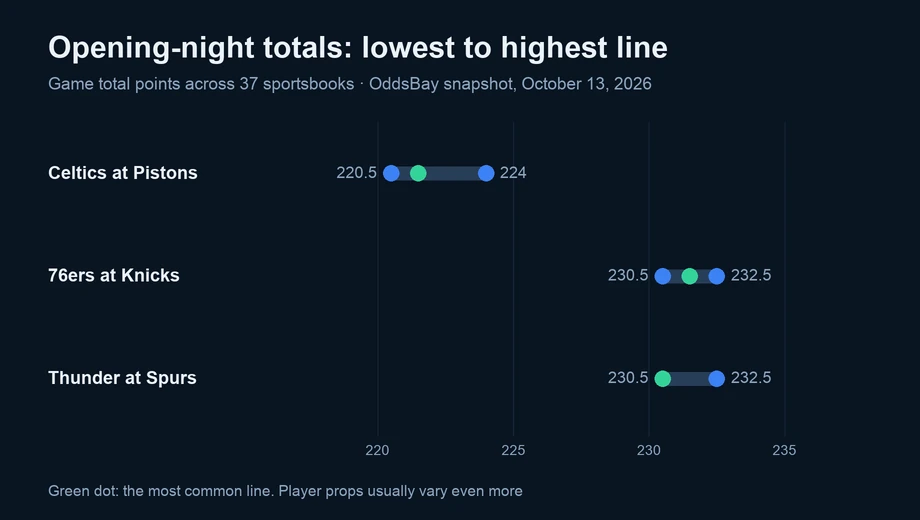
- Limits. Because they are harder to price, books often limit prop bets more tightly.
What to check before betting a prop
- The status of every relevant player, not just the star. Teammates’ availability changes who absorbs the minutes. Our guide to NBA line movement and player news explains how statuses evolve on game day.
- Expected minutes. Minutes drive counting stats. A player returning from injury may be on a minutes limit. Our guide to NBA lineups and rotations covers minutes.
- Whether the line already moved. If a teammate’s points line jumped after the news, much of the value may be gone.
- The price on both sides. Prop prices vary; convert to implied probability and compare sportsbooks in the OddsBay Price Finder.
- The sportsbook’s rules. What happens if the player starts but leaves early, or does not play at all, differs between books.
The game-script effect
Props depend on how the game unfolds. In a blowout, starters may sit the fourth quarter, which can sink their overs. A close game keeps them on the floor. When a star is out and his team becomes a big underdog, think about how that affects minutes for everyone else, not just usage. Our guide to NBA matchup analysis explains how game context shapes results.
Variance in props is high
A single player’s points total depends on a small number of shots, so it varies a lot from night to night, and three-point shots add even more variance. Our guide to three-point shooting variance shows how much. Even good prop bets lose often, which is a reason to keep stakes small.
Common mistakes
- Betting a teammate’s over after the line moved. The obvious beneficiary is usually priced first.
- Ignoring minutes limits. More usage per minute does not help if minutes are capped.
- Forgetting the void rules. Know what happens if your player does not play.
- Building big prop parlays. Each leg carries its own margin, and the margins compound.
Betting responsibly
Props can feel like easy money when a star is out, but they are high-variance, high-margin bets, and most bettors lose money over time. Keep stakes small (our guide to bankroll management shows how) and treat betting as entertainment. If gambling stops being fun, help is available: in the United States, the National Problem Gambling Helpline is available 24/7 by calling or texting 1-800-MY-RESET.
Key takeaways
- A star’s status change affects his own props, his teammates’ props and sometimes the opponent’s.
- Usage, minutes and pace explain most of the shift; different statistics move to different teammates.
- Props are smaller, higher-margin markets that sometimes update more slowly than spreads.
- Check every relevant status, expected minutes, whether the line already moved, the price and the void rules.
- Game script and shooting variance make props volatile; keep stakes small.
Frequently asked questions
What happens to my prop if the player does not play?
At most sportsbooks the bet is voided, but rules differ, especially if the player starts and leaves early. Check the book’s rules.
Who benefits most when an NBA star is out?
Usually the player who takes over his role, such as primary ball-handling or the starting spot, though the effect often spreads across several teammates.
Why do prop prices differ so much between sportsbooks?
Props are smaller markets with more numbers to price, so sportsbooks disagree more and update at different speeds.